A First Visit to a Community Sports Festival
A first visit to a community sports festival is easier with a light plan: choose a few events, leave room for rests and discover what draws you in.
The common mistake at a first visit to a community sports festival is trying to see everything. A packed timetable can turn a day meant for easy curiosity into a sequence of hurried walks, missed starts and guilty decisions about what to skip. A better plan begins with two or three things you genuinely want to watch, then leaves the rest of the day open.
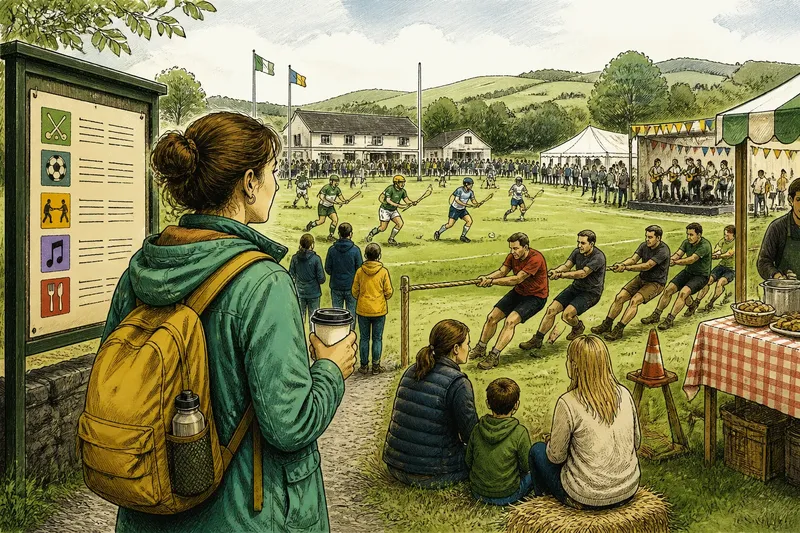
Imagine Niamh, who lives near a sports ground hosting a Saturday festival with youth hurling, a five-a-side football competition, a tug-of-war, music and food stalls. She has not been to one before and knows none of the teams. Her aim is simple: spend a few hours there, get a feel for the place and leave while she is still enjoying herself. The choices she makes offer a useful model for a first visit without turning it into an itinerary to obey.
Choose a first visit around curiosity, not coverage
Niamh first checks the festival notice for the venue, opening time, timetable and any information about access. Rather than marking every listed activity, she picks the youth hurling because she has never watched a match closely, and the tug-of-war because it sounds lively and is easy to understand at a glance. She keeps the football competition as an optional stop, not an obligation.
That distinction matters. A festival timetable is a menu, not a promise that a visitor should consume every item. Events may overlap, run late or be spread across separate pitches. If you choose a few anchors, you can make reasonable decisions on the day without treating each change as a failure.
For a first outing, look for a mix of formats: one event with a clear start, one activity you can drop into part-way through, and perhaps something social such as music or a craft stall. This helps if a match is delayed or a crowd gathers around an unexpected contest. You are not choosing the “best” events; you are giving yourself more than one way to enjoy the afternoon.
Pick the event you would most regret missing, then let the others stay flexible.
Check the practical details before setting out
Before leaving home, Niamh checks whether the festival is on a public field or at a club ground, where visitors are asked to enter, and whether the programme names a meeting point. She also looks for information on parking, public transport, toilets and accessible routes. If any detail is unclear, a brief message to the organiser can prevent a needless detour.
She dresses for an outdoor Irish day rather than for the forecast alone: a light waterproof layer, comfortable shoes and an extra warm layer that can be tied around a bag if the weather stays mild. She brings water and a small snack, while planning to buy food if a stall is open. The point is not to pack for every possibility, but to avoid a minor discomfort becoming the reason to leave early.
Some festivals have admission arrangements, restricted areas or rules about photography, dogs and bringing food. Check the organiser’s notice, venue information and local instructions where these apply; the relevant conditions can vary from one event to another.
A little preparation is useful when it removes uncertainty, not when it fills the bag.
Arrive with time to understand the ground
Niamh reaches the entrance with enough time to find the programme board before the hurling begins. She pauses to see how the ground is laid out: the pitches, the route between them, the toilets and the places where spectators are gathering. A quick look at the site map or a question to a steward is more helpful than trying to infer every boundary from the crowd.
At community festivals, the playing area may sit beside club facilities or shared public space. Spectators can usually tell where to stand by following signs and the existing viewing line, but it is sensible not to cross a pitch or block a gate. If a match is underway, wait for a natural break before moving past the edge of play.
She chooses a spot where she can see without pressing into the busiest part of the crowd. From there, she can watch the players and notice how other people follow the game. Niamh does not need to know every rule to enjoy the movement and atmosphere; she can ask a companion or listen for a short explanation if a moment puzzles her.
Find your bearings first; the timetable can wait a few minutes.
Let one event lead naturally to the next
The hurling match gives Niamh more to notice than she expected: players calling to one another, a sideline exchange and the way spectators respond to a close passage of play. She stays for the part that interests her, then leaves when the match moves into a lull. She does not wait for a formal ending simply because it was the first item on her plan.
On the way towards the tug-of-war area, she sees a group practising a short skills challenge. A volunteer explains that people can have a go between scheduled bouts. Niamh watches first, then tries the challenge when there is space. It is a small, unplanned encounter, but it becomes the most memorable part of her visit because it lets her participate without needing to join a team or know the rules in advance.
This is one reason not to schedule every minute. A local festival is made up not only of fixtures but also of pauses, conversations and activities that may not look important on a printed programme. A visitor can take part at the level that feels comfortable: watch from the edge, ask a question, join a low-pressure activity or simply move on.
Say you arrive expecting to watch a football match, but find it delayed while a nearby music group is playing. You could stand back for a song, check the revised schedule with a steward and decide whether to stay or visit the food stalls; the observable result is that the delay becomes part of your day rather than a stretch spent waiting without a choice.
What should you do when plans change?
What if an event is delayed?
Check the programme board or ask an organiser whether the start time has changed. Then choose a nearby activity or take a break, rather than waiting in one place without knowing what is happening.
How long should you stay at one event?
Stay while you are interested, not for an arbitrary portion of the timetable. A short visit can still give you a sense of a match, demonstration or contest.
Can you attend without knowing the sports?
Yes: watching the pace, teamwork and reactions is enough to begin. If a particular rule matters to your enjoyment, ask a companion or an organiser at a suitable pause.
What if the crowd feels too busy?
Move towards a quieter viewing point, take a break away from the activity or leave if that feels right. There is no requirement to stay in the busiest part of a festival to count as having attended.
Make room for breaks and an unhurried exit
After the skills challenge, Niamh sits near the clubhouse with her snack and water. She checks the timetable again and sees that the football competition is beginning, but she does not hurry back to the pitch. She has enjoyed the match earlier and is content to watch from a distance for a while before deciding what to do next.
Breaks are part of the plan, not a sign that the visit has gone wrong. Find a place where you are allowed to sit, keep walkways and entrances clear, and step away from noise or crowds when you need to. If you are attending with children or anyone who may need extra support, agree on a simple meeting point and make sure they know who to approach if separated.
As the afternoon goes on, Niamh notices a noticeboard listing the club’s regular sessions and a volunteer taking down questions at a table. She asks when the next public event is, but does not feel obliged to sign up for anything. The visit has given her a more grounded impression of the club than a list of events could: people are using the space, helping one another and making room for spectators.
When she leaves, she has seen two sports, tried an activity and taken a proper break. She has not completed the programme, and that is exactly why the day felt manageable. For your own first visit to a community sports festival, choose a small number of things to seek out, check the practical details, and leave time for whatever catches your attention on the ground.
Before heading home, note one thing you would like to see again and one detail that would make the next visit easier, such as a better route between pitches or bringing a folding seat if permitted. That small reflection turns a first outing into a useful starting point without asking it to become anything more.